
5/1/26
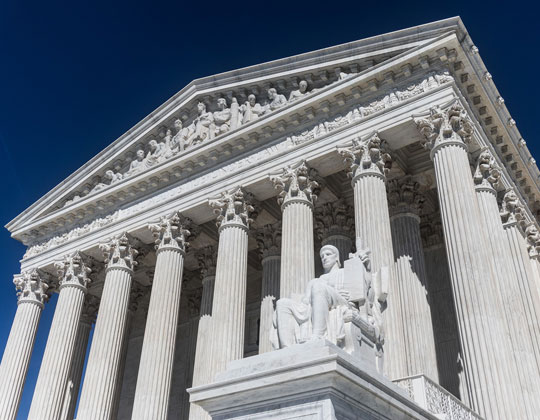
On Wednesday, April 27, 2026, the Supreme Court ruled 6-3 in the Louisiana v. Callais case that Louisiana’s enacted congressional map, which featured two majority-Black districts, was an unconstitutional racial gerrymander. The Louisiana v. Callais case was created after a federal court ruled that Louisiana’s previous map violated the Voting Rights Act because they did not have enough majority-Black districts to properly represent the Black population in Louisiana. As a result, Louisiana redrew their congressional map, adding another majority-Black district so they had a total of two. This updated map was the one that the Supreme Court deemed unconstitutional.
The state of Louisiana has six representatives in the House of Representatives. Previously, the state had one Black representative in the House of Representatives. This poses a conflict because approximately one-third of Louisisna’s population in Black. Since they have six total representatives, two of them should be Black to properly represent the Black population in the state. Black voters claimed that this lack of proper representation violated Section Two of the Voting Rights Act, which prohibits discrimination in voting.
The Supreme Court’s ruling on this case is causing a lot of mixed feelings in the United States. Louisiana’s Black population is not getting equal representation in the government, so they are very displeased with the decision. Recently, Senate Democratic Leader Chuck Schumer of New York spoke out. He said that this ruling “upends half a century of precedent” and “defies the spirit of the American Civil Rights Movement.” Like Chuck Schumer, most Democrats are very unhappy with the ruling and claim that it is discriminating against the Black population and making their votes matter less due to the lack of representation. On the contrary, a lot of Republicans have shown their support of the ruling, since they believe that considering race when drawing district lines is unconstitutional.
In response to the Supreme Court’s decision, Louisiana is planning to suspend House Primaries that were supposed to take place on May 16th. This is so the state can redraw their congressional map once again. There are growing concerns around whether or not this ruling will affect midterm elections and if Louisiana’s January 2024 congressional map, the one with two majority-Black districts, will be used during them, or if their next redrawn map will be used. People are also worried that redistricting, the act of redrawing each state’s congressional maps after the U.S. Census, will be affected. It may be affected because if any state considers race while redistricting, they may not be able to use that congressional map during the elections due to it being seen as a racial gerrymander. Redistricting has been a huge tool for political figures, specifically presidential candidates, so any changes to redistricting can affect the methods future candidates will use during their campaigns.
Minority-majority House districts have been ruled unconstitutional racial gerrymanders by the Supreme Court in the Louisiana v. Callais case. This ruling is affecting Louisiana’s Black population’s political representation, as well as affecting the future redistricting of the other states, since it is unconstitutional for race to be considered while the congressional maps are being redrawn.