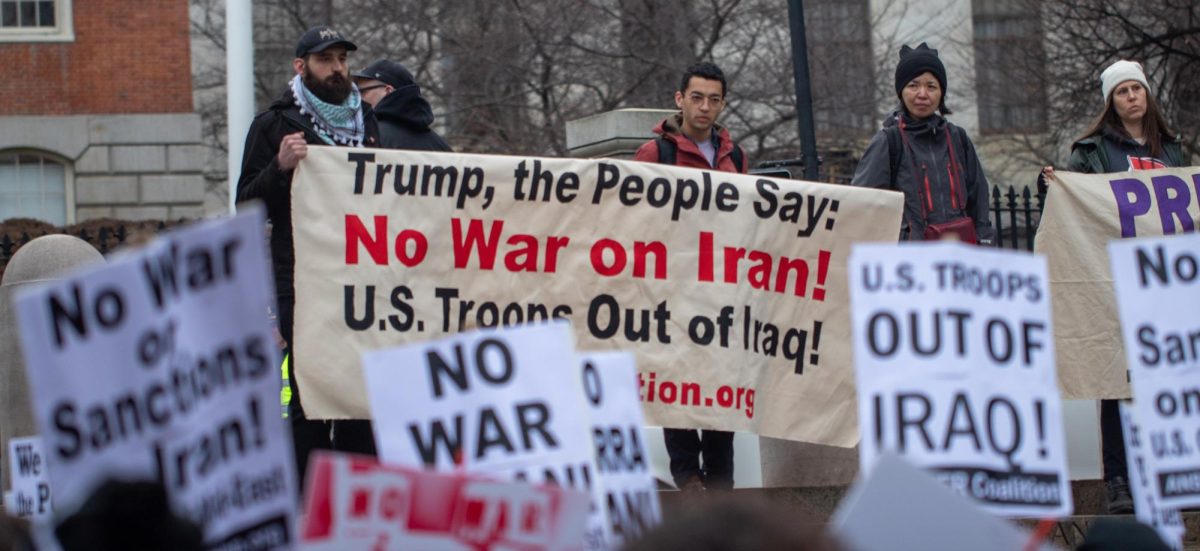
The United States and Iran have yet to agree to end the ongoing war. However, there have been rumors claiming that peace talks between the two countries are expected in the very near future. Two weeks ago, on Saturday, April 11th and Sunday, April 12th, Vice President JD Vance tried and failed to reach a peace agreement in Pakistan that would put an end to the war. Despite this failure, President Donald Trump and JD Vance are hopeful that there will be peace talks within the next week.
It has been difficult for the United States and Iran to make an agreement because opening the Strait of Hormuz and limiting Iran’s nuclear capability are two of the United States’ non-negotiables that Iran has been hesitant to agree with. The Strait of Hormuz is a waterway and world’s most critical oil chokepoint; around 20% of all the world’s oil and liquefied natural gas passes through the Strait of Hormuz. As of April 14, 2026, the strait has been closed to the United States, Israel, and all of their allies for 43 days. Consequently, gas and oil prices have surged in the United States, causing many citizens to worry about the effects the war is having on the country.
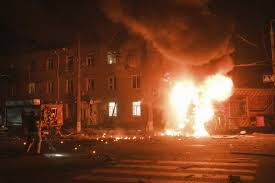
Also, as of April 14, 2026, the war between the United States and Iran began 46 days ago. This war began because of the potential threat that Iran’s nuclear programs and abilities could pose to the United States and their allies. Since the war began, there have been attacks and bombings from both sides; Iran has been targeting United States military and government sites, and the United States has been targeting members of the Iranian government and their government sites. To combat Iran’s closure of the Strait of Hormuz, the United States military has launched a blockade that stops ships from entering or exiting Iranian ports. Despite the U.S. Central Command claiming that no Iranian ships have gotten past the blockade, other reports state that 26 Iran-linked ships have been able to successfully get through it.
Many peace proposals and efforts have been made by the United States to end the war, but Iran has yet to agree to any. Trump recently set another deadline for Iran to open the Strait of Hormuz before he bombs Iran again, hoping to cause irreparable damage and destroy their country completely. Trump has issued many deadlines for Iran to ceasefire and open the Strait of Hormuz with threats of more attacks as a consequence for not meeting them. So far, all of them have been delayed or extended.
Additionally, the United States asked Iran for a 20-year suspension of uranium enrichment. Uranium is a naturally occurring, radioactive material that is used in nuclear weapons. Iran countered this proposal with a promise to suspend their uranium enrichment for three to five years instead. As uranium and Iran’s nuclear technology were the main causes of this war, the United States refused to agree to their proposal. Instead, the United States asked Iran to remove all of the highly enriched uranium from their country. Iran agreed to the “monitored process of down blending,” which is a process where dangerous and highly concentrated uranium is mixed with less dangerous uranium to make it less potent. If the uranium is less potent, a nuclear explosion is harder to achieve, slowing down and damaging Iran’s nuclear weapon production.
Peace talks to end the war are expected to take place as soon as Thursday, April 16th, 2026. Even though there have not been any agreements made between Iran and the United States, some good has come from all of these unsuccessful peace talks: the truce between Tehran, Iran’s capital, and Washington D.C. is still strongly in place, and Lebanese and Israeli officials are talking in Washington D.C. for the first time in decades.