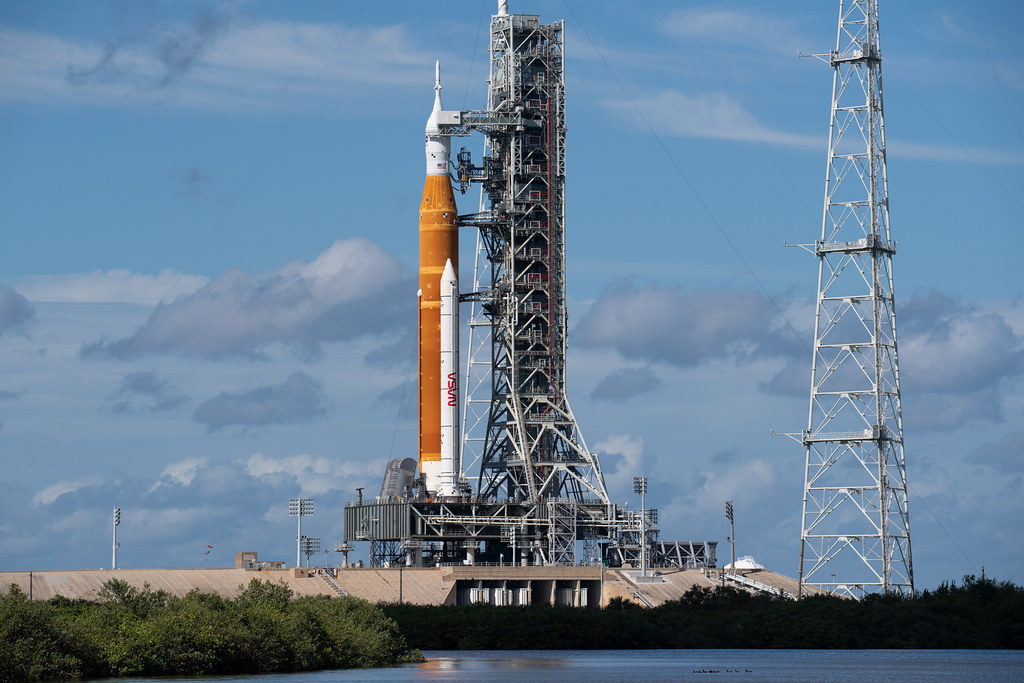
NASA has announced the delay of the upcoming trip to the moon due to extreme freezing temperatures at the launch site. The 1st Artemis moonshot is now planned for February 8th, two days later than originally planned.
NASA was set to be conducting a fueling test of the moon rocket on Saturday, but it had gotten canceled on Thursday night due to the cold. The critical dress rehearsal that is essential for the mission has been moved to Monday. This change will leave NASA with only three days within February to send four astronauts to orbit the moon and return back before March. In a statement on Friday, NASA said, “Any additional delays would result in a day for day change.”
The issue was connected to a special coating that is applied to the bottom part of the spacecraft, known as the heat shield. It’s a crucial piece of hardware that is designed to protect astronauts from extreme temperatures. Officials said, “Heaters are keeping the Orion capsule warm atop the rocket and rocket-purging systems are being adapted to the cold.”
The essential part of the Orion spacecraft is similar to the heat shield that flew on an uncrewed 2022 test flight, Artemis I. Previously, the mission’s Orion vehicle had returned back from space with its heat shield pockmarked with unpredicted damage, leading NASA to investigate this issue. Despite NASA having assured that the heat shield was clear to fly, many had acknowledged the safety within this mission while knowing the unknown risks involved.
Former NASA astronaut Dr. Danny Olivas, who served on a space agency-appointed review team that investigated the incident, stated, “This is a deviant heat shield. There’s no doubt about it. This is not the heat shield that NASA would want to give its astronauts.” Although, Dr. Danny said, “He believes after spending years analyzing what went wrong with the heat shield, NASA has its arms around the problem.” After completing the investigation a year ago, NASA has determined that it will fly Artemis II Orion Capsule with the belief that it will assure the crew’s own safety by faintly altering the flight path of the mission. The crew safety is the highest priority in this NASA mission, as they ensure the successful launch of the mission and return safely back to earth.