
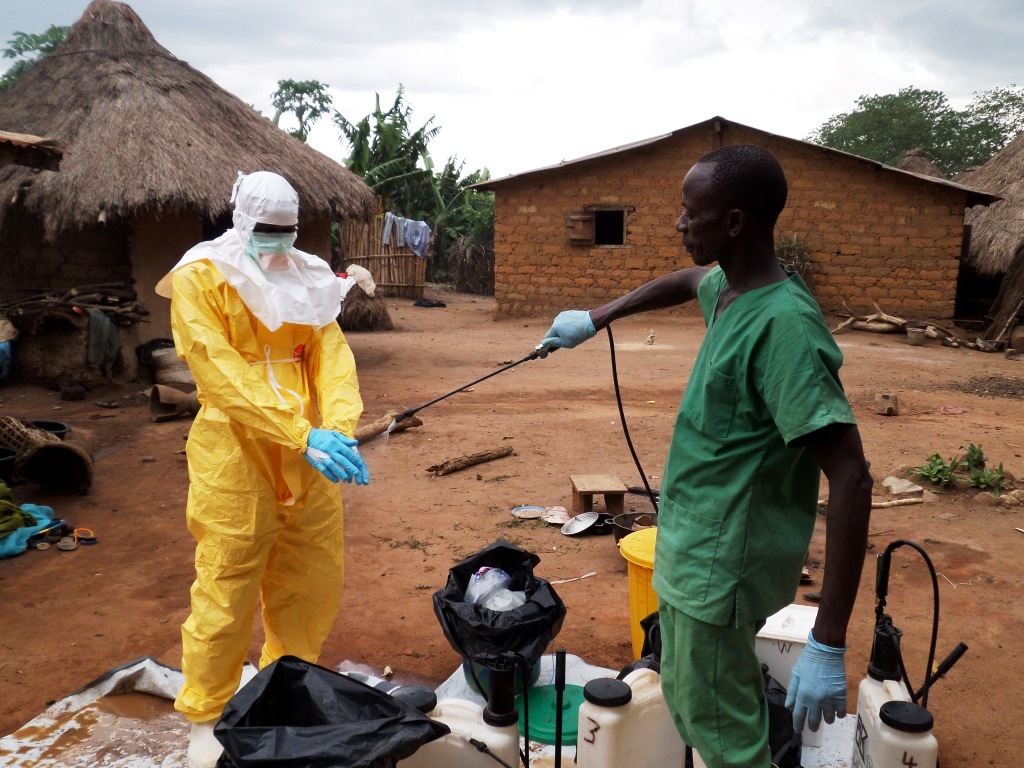
There is a massive Ebola outbreak in the Democratic Republic of Congo (DRC) and Uganda. This virus is spreading around very quickly and could hold a high risk both at a regional level and national level. The World Health Organization (WHO) is currently trying to assess and control the situation at hand. They have officially declared the outbreak a “public health emergency of international concern,” but the risk of a global situation is highly unlikely. So far, 51 cases have been confirmed in the DRC, but there is a suspected number of over 600 more cases and over 125 deaths connected to the outbreak.
This is a rare strain of Ebola named Bundibugyo. Currently, there is no treatment or vaccine that is specific to this strain of Ebola. The exact way humans contract this virus is still unknown. “We don’t know for sure where it comes from but we have our suspicions,” said Dr. Abraar Karan, an infectious disease physician and faculty at Stanford University. The current theory is that Ebola is picked up by eating bat meat or by being exposed to bat poop when miners go into caves.
“A number of animals have also tested positive for antibodies, so certain types of deer called Duiker that eat meat have been implicated. Non-human primates have shown antibodies,” Karan said. Normally, the virus is contracted and passed on from an animal to a human before spreading to other humans. The symptoms can vary from case to case based on many factors from the patient. Some of these factors include genetics, exposure time, age, previous medical history, and much more. Some get over it after a few days with mild symptoms, while others can experience much harsher symptoms and die from the disease. The symptoms typically start off with a “dry” set of symptoms. This includes things like nausea, fever, aches, pains, fatigue, and more. As time passes, they advance into a more “wet” set of symptoms. This includes things like vomiting, diarrhea, and unexplained bleeding. This can also lead into more serious effects like organs shutting down, shock, and death. More information is needed to be more precise, but the estimated fatality rate of this strain of Ebola is around 30-50%.
Back in 2014 to 2016, there was a large Ebola outbreak, mostly located in West Africa, with the Zaire strain being spread around. According to the US Centers for Disease Control and Prevention, the fatality rate for the Zaire strain was up to 90% if left untreated. This outbreak primarily affected Guinea, Liberia, and Sierra Leone and resulted in over 28,000 cases and 11,000 deaths. This strain of Ebola is actually the most deadly and the most common, showing how dangerous the virus can be. Because of the weak surveillance, fragile public health, infrastructure, and infection control measures, it was very difficult for the World Health Organization to reach the patients during this outbreak to give them the proper treatment. This is one of the main reasons why the outbreak was so deadly and at such a high level. Luckily, in August of 2014, the WHO was able to declare it a Public Health Emergency of International Concern and collaborate with many government organizations, ministries, and clinics to help get the situation fixed and completely over by June of 2016.
Dr. Vasee Moorthy, the WHO’s senior science and strategy advisor, stated in a conference that a vaccine was 6 to 9 months away from being available for clinical trial. Another vaccine is being developed by the University of Oxford and India’s Serum Institute and is having doses, “manufactured as we speak.” It is difficult, though, as the outbreak was caught late and is presumed to have started largely spreading weeks, if not months, ago. At the moment, it seems the World Health Organization, along with much help from others, seem to be handling the situation with a lot of concern to keep it under control and a global problem is very unlikely.