
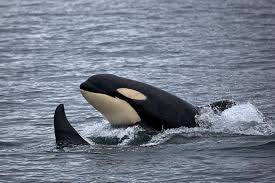
Off the coast of British Columbia, Scientists have observed that a pod of pacific white-sided Dolphins have been working together with Orcas, one of the largest dolphins in the ocean and natural predators of dolphins, known as traditional enemies rather than having friendly interaction.
Scientists have been documenting the interaction of orcas and dolphins for decades, including recent studies in December 2025, which emphasize the complex, but new, cooperative hunting behaviors found within these marine mammals: “They have documented the dolphins and local population of killer whales known as Northern Resident Orcas teaming up to hunt the Orcas’ staple food: salmon. Even though other groups of orcas feast on dolphins, Northern Residents do not. Still, it is the first time this type of cooperative behavior has been documented between the two marine mammals.” The lead author of the study, Sarah Fortune, who is also an assistant professor in Dalhousie University’s oceanography department and Canadian Wildlife Federation chair in large whale conservation, stated, “Seeing them dive and hunt in sync with dolphins completely changes our understanding of what those encounters mean.”
In several attempts to witness the orcas and dolphins interact, researchers had captured underwater video and drone footage by attaching suction tags to the orcas, which were equipped with hydrophones and cameras. The footage revealed the killer whales traveled towards the dolphins and began following them at the surface level. Additionally, the underwater footage had shown the killer whales were following the dolphins on their drives about 60 to 197ft, where the orcas would be able to prey upon the Chinook salmon, a large Northern Pacific salmon. Sarah Fortune stated, “Despite the light levels are low within those depths, cameras picked up the killer whales catching salmon, with clouds of blood billowing from their mouths, and hydrophones picked up the crunch of a kill.”
In a video Sarah and her colleagues collected, it demonstrates that when orcas caught their prey and shared it with the pod, the dolphins were quickly eating the leftovers. Sarah Fortune said, “But salmon isn’t a core part of a dolphin’s diet, so greater access to food wasn’t the sole motivation. By hanging out with the orcas, dolphins likely gained protection from other orcas pods that pass through the area and hunt dolphins.” Furthermore, via email, Sarah Fortune said, “Over several years of observations, we concluded that dolphins and porpoises likely gain protection from their primary predator.” She added, “We suggest that Northern Resident killer whales derive no clear benefits from these interactions, but that actively avoiding or resisting them may impose greater energetic costs than tolerating them.”