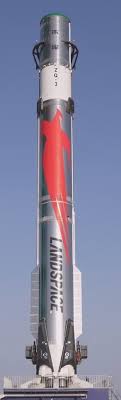
On December 3rd, a private Chinese space firm had achieved sending its Zhuque-3 rocket to orbit, but failed its attempt to reland the rocket booster. which is the first trial while the company is rising in the commercial space sector and attempts to catch up with American rivals. One of the sector’s leading firms, Beijing-based LandSpace, launched the Zhuque-3 rocket in space from a remote, desert launch site located in northwestern China.
The Chinese company, LandSpace, said in a statement, “The rocket entered the orbit as planned, but its first stage, the portion of the vehicle that propelled it at liftoff, did not successfully return to a landing site, instead crashing down.”
In a statement made by LandSpace stated, “An anomaly occurred after the first-stage engine ignited during the landing phase, preventing a soft landing on the designated recovery pad. The debris landed at the edge of the recovery area, resulting in a failed recovery test.” It also added, “The team would conduct a comprehensive review and continue to advance the verification and application of reusable rocket technology in the future mission.” Although it was unsuccessful, the trial did place the company in the lead of Chinese firms competing in developing the reusable rocket technology in the growing commercial space sector which Beijing hopes will be helping in transforming the country into a stronger aerospace nation and power the competition with global rivals.
Reusable rockets became essential because the technology will crucially lower the price and shift the time of the rocket launching, a distinct advantage since various global firms are competing to build satellite networks as the future of the space travel industry. Furthermore, it can provide a strategic advantage for any country, since space is progressively becoming a field that is connected towards defense capabilities on Earth and military power. It also established the foundation of Elon Musk’s firm, SpaceX, and its success with discussing how to land and rescue the rocket boosters almost a decade ago, but which currently controls the global launch market.
Last month, American SpaceX competitor Blue Origin had completed its very first landing of the first stage of the New Glenn rocket, resulting in successful launches of a pair of satellites that were sent to Mars. This accomplishment had followed a landing attempt of a failed booster by the company earlier this year. According to Blaine Curcio, a space expert and founder of Orbital Gateway Consulting, “LandSpace’s Wednesday attempt was an impressive feat that appeared to be upwards of 90% successful.” When Blaine had pointed out on how the rocket had come down close to the expected landing zone, he said, “It looks like it was really a largely successful attempt, and that there’s either a structural issue or an igniter issue, or an engine issue. That will take some time to fix, but it will not take years to fix.” He added, “All of those things are generally good signs for the maturity of the commercial space sector in China.”
Several Chinese firms, including LandSpace, are developing reusable rocket technology. Commercial firms, with the blessings of Beijing, are gradually becoming a more significant part of China’s space innovation, which reflects a model that had been successful within the United States. In recent years, Xi Jinping, the president of China, had emphasized that “the aerospace sector as a strategic emerging industry, with the country’s upcoming five-year plan expected to include a focus on accelerating the development of the country into a strong aerospace nation.” In the past decade, many private firms had conducted orbital launch missions, while some developers carried out initial land tests on reusable rocket technology.
The director of Taibo Research Institute, Liu Yuzhang, whose Chinese think tank focused on aerospace industries, had told CNN, “From 2015 up to this year 2025, exactly 10 years, China’s commercial space sector has essentially gone from nothing to a new critical point.” Back on Monday, December 1st, the country’s space authority announced it had created a new internal department to develop and manage the commercial space sector. Additionally, it had displayed a two-year action plan that would incorporate the country’s own commercial space sector to become the national space development strategy.
The sector is assured for fast advancement, and individuals who have watched closely mention that much work does remain and failure is a part of the process. Before the launch, Liu Yuzhang had told CNN, “Even when there is failure, there is the mindset of returning to zero and continuing rapid, ongoing iteration.” He also added, “The long-term goal is to reduce rocket launch costs and further improve the ability to send satellites into orbit, including delivering supplies to the space station, and even contributing to lunar or Martian exploration.”