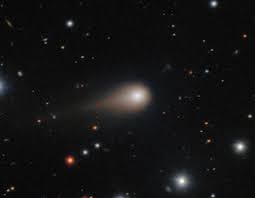
On November 19, NASA had shared the latest images of an interstellar comet, capturing how an array of spacecraft had witnessed a flyby, which was fantastic, showing clues to the composition of the object.
Back on July 1st of this year, astronomers had first detached the rare comet that was called 3I/ATLAS. This is only the third observed interstellar ISO or object that originates outside the solar system and passes through it. Back in October, when the interstellar comet had flown by the red planet, Mars, many NASA missions had temporarily turned from their explorations in order to capture alluring images of the object which originated outside of the solar system.
The United States space agency released these new observations on Wednesday, November 19th, because it was at first unable to share them during the government shutdown, since the funding had halted non-essential activities, such as data release, external communications, and public outreach. This also coincided with the observation of the comet resulting in speculation and delays about the object’s nature and image. Even though none of the spacecraft had cameras that were perfectly designed to spot comets speeding about 153,000 miles per hour and 246,000 kilometers per hour, astronomers chose not to miss this opportunity.
The lead scientist for the solar system’s small bodies at NASA, Tom Statler, had stated, “It’s a little bit as if our NASA spacecraft were at a baseball game, watching the game from different places in the stadium. Everybody has got a camera and they’re trying to get a picture of the ball and nobody has a perfect view, and everybody has a different camera.”
Associate administrator for NASA’s Science Mission Directorate Nicky Fox stated, “Nearly 20 mission teams collaborated to capture images of the comet.” He also added, “Everything we’re learning about the comet is possible because of the distribution of all of the different instruments on our spacecraft with different capabilities. We’ve even pushed our scientific instruments beyond the things that they were designed to achieve, to allow us to capture this amazing glimpse at this interstellar traveler.”
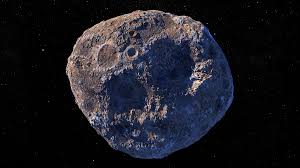
Back in September, the Lucy and Psyche spacecraft, which is an en route of studying solar-focused missions and asteroids, had caught glimpses of the comet. Tom Statler said, “Combining the data from Lucy and Psyche with Earth-based telescopes can reveal more about the three-dimensional structure of the comet and the nature of the dust coming off of it due to the heat of the sun.” He also added, “It’s a rare opportunity to compare ancient dust from a distant solar system to that from our own.”
Nicky Fox said, “The Mars Reconnaissance Orbiter and Perseverance rover also tracked the comet as it zoomed past the red planet in October. The orbiter was the spacecraft physically closest to the comet.” According to Tom Statler, “The comet arrived at its closest point to the Sun when Earth was on the wrong side for ground-based telescopes to conveniently observe, but Mars had optimal viewing conditions. Our Mars assets were able to observe the comet, and also several of our other spacecraft were on the correct side of the sun. We could not get this view from the vantage point of the Earth.”
On October 3rd, the comet came within about 18 million miles and 29 million kilometers of Mars. The ESA’s ExoMars Trace Gas Orbiter that has been circling around the red planet since 2016, is about 10 times closer to the comet than the telescopes on Earth that captured images from an angle which Earth-based telescopes can not see. This fresh perspective of 3I/ATLAS has authorized scientists into predicting the comet’s own future path with a tenfold jump within accuracy. An planetary astronomer and assistant professor in the department of astrophysics and planetary science in Villanova University located in Pennsylvania, Dr. Theodore Kareta, had said, “While scientists have been using telescopes around the world to study 3I/ATLAS, spacecraft missions provide some key observational advantages.” He added, “Cameras and instruments on different spacecraft are geared toward various goals and measurements, and they can provide distinct vantage points that might be otherwise impossible to capture. Comets are three-dimensional objects, and looking at them from different angles will give us a much clearer picture of not just where they are and the trajectory they’re on, but also how large the nucleus of the comet is and the nature of any structures or patterns we can see in its atmosphere.”
Tom Statler said, “Scientists currently think the comet is anywhere from a couple of thousand feet to a couple of miles in diameter, but they are still refining their measurements.” NASA officials had immediately addressed the rumors which revolved around 3I/ATLAS’s own interstellar nature, specifically the idea of it being an alien spacecraft. NASA Associate Administrator Amit Kshatriya said, “It looks and behaves like a comet, and all evidence points to it being a comet. But this one came from outside the solar system, which makes it fascinating, exciting and specifically very important.”
Nicky Fox said, “NASA’s close monitoring of the comet since its discovery has not yielded any evidence that would lead them to believe it was anything other than a natural celestial object, like technosignatures, a signal that could be created by extraterrestrial life.” He added, “But the super cool thing is not that it’s exactly like all the comets that we see in our solar system. It’s the differences that are so tantalizing for us.”
Amit Kshatriya said, “He was actually excited to see much of the world speculating about the comet while NASA was unable to share comment about it due to the constraints of the recent shutdown.” He added, “It expanded people’s brains to think about how magical the universe could be. In fact, we want very much to find signs of life in the universe. But 3I/ATLAS is a comet.”