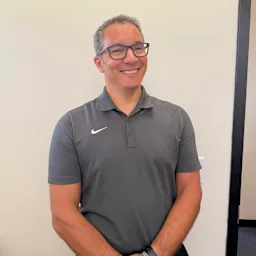
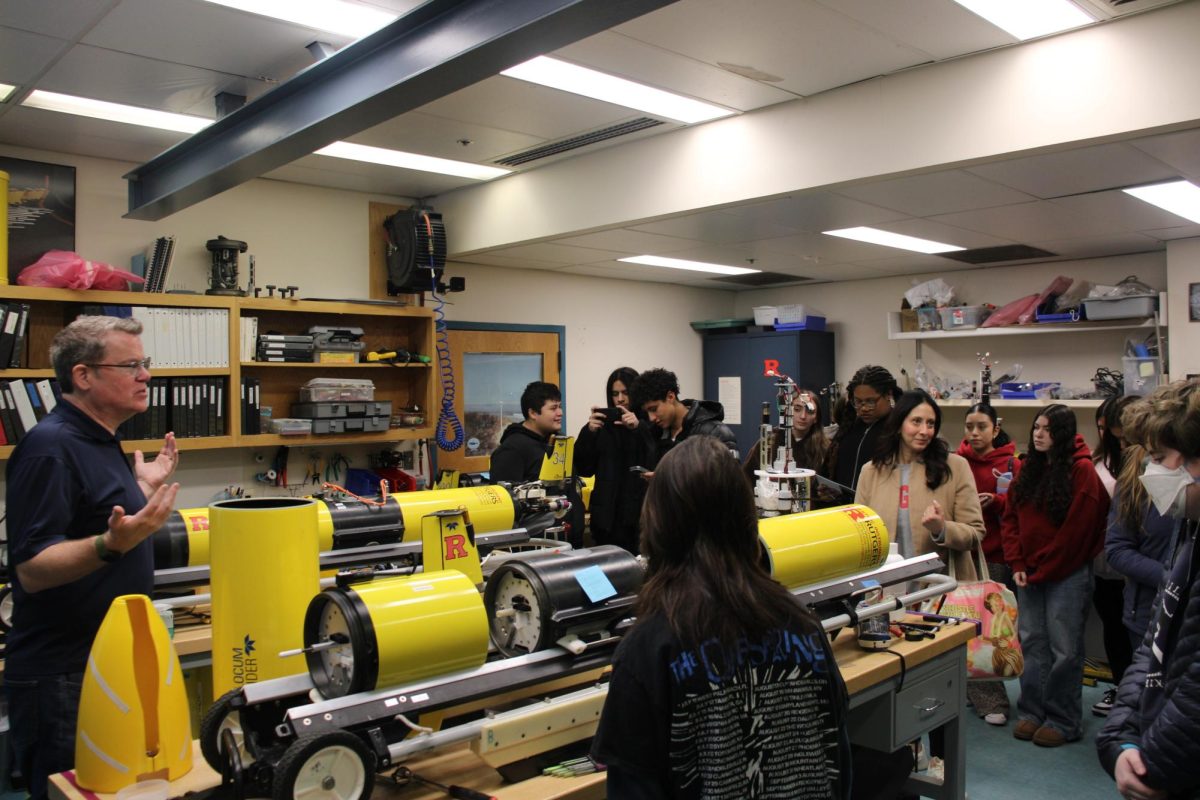
This past month, Manville High School’s Environmental Club went to Rutgers University in New Brunswick, New Jersey for a field trip. On the trip, they met with Dr. Michael Crowley from the Department of Marine and Coastal Sciences. Dr. Michael Crowley provided the club with a detailed tour of the department, which focuses on research and education regarding oceanography, marine biology, and coastal processes.
At Rutgers’ Department of Marine and Coastal Sciences, also known as DMCS, scientists, students, and educators work together to study marine ecosystems, climate change, fisheries, coastal processes, and ocean-human interactions. The Department of Marine and Coastal Sciences combines biology, chemistry, geology, policy, and physics, to assess and bring attention to environmental challenges. This department’s goal is to connect society to marine life and the ocean through research that supports environmental management. DMCS is essential to the progression of scientific understanding, informing coastal management about the environment, and training and educating future generations of marine and coastal scientists. The DMCS has ties to New Jersey’s coastal and estuarine environments and has access to field stations, making their work, research, and training more accessible and accurate.
The Environmental Club also got to see and learn about the ocean gliders that are operated by the Rutgers University Center for Ocean Observing Leadership, also known as RUCOOL. The ocean gliders are advanced underwater vehicles that can collect continuous and high-resolution ocean data over extended periods of time. They can also operate over very large expanses of distance. These ocean gliders help scientists study physical, chemical, and biological processes that are currently occurring in the ocean, making them a core pillar of Rutgers’ observing system.
Since Manville High School’s Environmental Club focuses on environmental awareness, this field trip was an amazing opportunity for them! It provided education on what is currently going on in today’s ocean environment and it taught the students how data is collected so the scientists can study and research it. The Environmental Club also prioritizes community service partnerships. These community service partnerships are with Duke Farms, NJSOC, and Raritan Headwaters and consist of clean-up drives, research opportunities, field trip opportunities, educational workshops, and partaking in environmentally conscious projects that will help beautify our school.
Additionally, Manville’s Environmental Club has received various grants through the NJ School of Conservation, USA Blue Schools, and Rutgers University. These grants have gone towards a variety of activities that support their science curriculum and promote polar and ocean literacy.
Some students who went on the field trip have described this experience as an educational and interesting opportunity that provided them with more information about their interests in the environment. As some of the students want to study environmental science after high school, they reported that the field trip was also successful in supplying them with ideas for what jobs may be out there for them to do in the future.
Overall, the Environmental Club’s trip to Rutgers University was a great opportunity that aligned with the club’s interests and taught the club members more about the environment and the research that goes into making scientific discoveries about it.